4 Ways to Improve your Mind/Body Wellness (and why you should)
A discussion with Lake Country mindfulness expert Cheri Cope
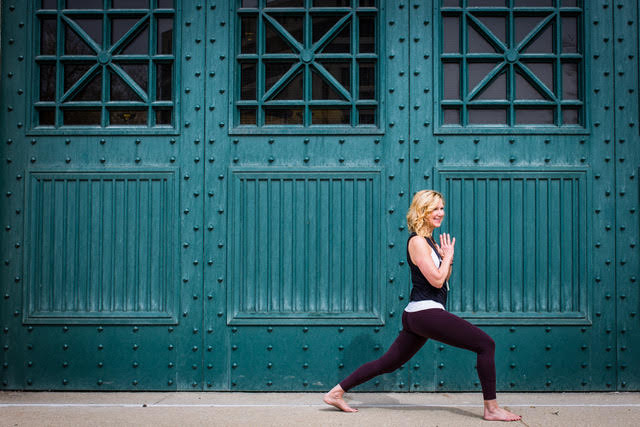
Mindfulness is an easy enough buzz word for companies and social media influencers to throw around. What’s harder is understanding what this even means in a practical sense, and how to move past the image of perfect-handstand models that have become synonymous with the practice, so that you too can feel the benefits of a more regulated nervous system and positive thought patterns.
And you can! If you think you can’t do it because you’ve never done it before – that’s the exact reason to start! For local expert Cheri Cope, mindfulness is not about perfection or even doing it right. It’s about keeping it simple and willing to try and be present, and learning about yourself in the process.
That’s good news for those of you who can’t touch your toes or thought meditation was just for highly trained buddhist monks.
As a Sport Psychology Consultant, Certified Yoga Teacher and Performance & Life Coach, Cheri knows a thing or two about the benefits of mind/body wellness. We’re lucky enough to call her our neighbor and dear friend, so we know firsthand how she integrates these practices into both her personal and professional life and radiates warmth into the community. She’s recently opened up a community space, Evolve, where teachers, students and entrepreneurs can practice yoga.

In light of Mental Health month, we spoke with Cheri so that we could provide accessible and actionable ways that everyone can begin to practice mindfulness.
There’s no gatekeeping here – nobody should feel timid about taking steps toward bettering their mental health.
From this conversation, Cheri has offered 4 easy ways to start a mindfulness journey and how it will transform your life.
Please seek your own professional help if you are struggling. Call 988 for a free Suicide & Crisis lifeline.
1. MEDITATION

Meditation is perhaps the most misunderstood mindfulness practice. What it really boils down to is taking time alone to observe your thoughts or any feelings that arise. A lot of times this involves focusing on your breath to ground you. It’s okay if your mind wanders – in fact, that’s kind of the point. Meditation is about recognizing this and drawing your awareness back. Cheri likens this to doing mental pushups.
How to start: You can start by doing this every morning for 5-10 minutes. You can use a guided meditation app like Calm or Mindfulness like she does to help you through it. Don’t obsess over being able to meditate on your own. Guided meditations are a great tool for both beginners and experts.
This is a great way to start your day and set the tone for the day. By doing this, you will start to learn that you are simply the observer of your thoughts – they don’t control you. For example, instead of being stressed, you recognize that you have a feeling of being stressed. You are not attached to this feeling. You can observe it and then let it go.
2. BREATH WORK

It’s already obvious how important breathing is – you need it to live. And you do it without even thinking about it. But if you can learn how to control your breath using different techniques, you can also unlock endless health benefits, including nervous system regulation, a shift in energy, better focus, and decreased tension.
If you need more proof – the Navy Seals use breath work as a core exercise for focus.
Breath work is an integral part of meditation and yoga, but Cheri recommends practicing it on its own as well, especially if you’re feeling anxious or stressed.
How to start: One way to start is to begin breathing in for 4 beats and then out for 7. Focus on lengthening and softening your breath, and having a longer exhale than inhale. Don’t try to work so hard while doing this. This will trigger the parasympathetic nervous system to calm you.
You can also try a box breath – where you inhale for 4 beats, hold your breath for 4 beats, exhale for 4 beats and hold for 4. This will also regulate the nervous system and put you in a focused state of mind.
If possible, nasal breathing is the most ideal, especially for your inhale. The nasal breath opens up the airways for a deeper breath, and is the correct way of breathing according to many studies.
3. SELF TALK
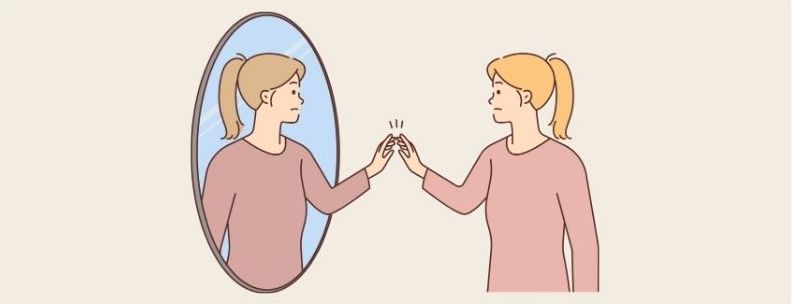
Mindfulness shouldn’t just stop when you get off the mat, or end your meditation session. Cheri recommends that you take what you’ve learned from these practices and check-in with yourself throughout the day.
How to start: If you recognize that you’re feeling stressed or off mentally, try to observe what you are thinking and what your mind is telling you.
Then, have a chat back with yourself! Tell yourself everything is okay. Observe these feelings and remind yourself that you are not your negative thoughts. Be kind to yourself in your internal monologue.
4. YOGA

Yoga is an excellent way to improve your mind/body wellness because it incorporates a lot of different techniques into one practice, and you have an instructor to guide you. Although yoga can be physically demanding, the benefits actually come from the breathing techniques and control of respiration. The physical movements are simply a conduit for this breath work.
If you didn’t know this, and you signed up for a yoga class to get a good workout, you’ll still inadvertently feel these effects anyway by following the cues of your instructor. But the transformation comes from much more than the physical workout in yoga.
How to start: Cheri recommends that beginners start with a gentle flow that will teach you the poses and incorporate enough time to really feel each movement. If you can commit to 2-3 days a week, that is great – but consistency is key here, not time. You can do this online from the comfort of your home, but Cheri emphasizes the added benefit of practicing with a community, where you can feel the energy of others in the room as you synergize your breath and tune out all distractions.
As you jump into your practice, you allow yourself the time to tune in to yourself. A lot can surface when you slow down and hold a pose. Yoga is like a laboratory of life in this regard, says Cheri.
Take stock of what’s going on as you are in your pose. Are you in pain? Do you feel tension? Do you want to give up and come out of the pose? Do you want to escape? Are you looking around the room at everyone else? Are you being negative to yourself?
As you breathe through these feelings, you allow yourself a moment of mindfulness to understand your self-talk.
Most importantly, you will turn your mind into your advocate instead of your worst enemy. And then you’ll begin to rewire any negative thought patterns that are embedded in your brain with positive ones.
If you never slow down long enough to do this, you’ll never have the mindfulness to understand what’s going in your brain that needs your love and attention.
All in all, Cheri reminds us that you can come to yoga for whatever reason you want, but if you come with an open mind and heart, and are willing to be present, you will leave with so much more. It’s not about a skill to be conquered. You’ll never conquer it. It’s a journey with no end game as you learn about yourself and transform.
It’s hard to understand unless you’ve experienced it.
Cheri Cope, MS, RYT 500
chericope.com